Understanding HOA Communities When Buying In Frisco
February 19, 2026
February 19, 2026
Buying in Frisco often means buying into a homeowners association. That can be a smart move if you want beautiful common areas, curated amenities, and a consistent neighborhood look. It also means specific rules, dues, and documents you should understand before you sign. In this guide, you’ll learn how HOAs work in Frisco, what dues typically cover, your key Texas buyer rights, and a step-by-step checklist to review an HOA with confidence. Let’s dive in.
Frisco’s growth has been powered by master-planned neighborhoods with shared amenities and professional management. The city even maintains a neighborhood program and HOA directory to help communities stay connected and coordinate on topics like emergency access and communication. You can see that engagement on the city’s official Neighborhoods page.
Frisco’s subdivision standards also explain why many new neighborhoods have mandatory HOAs. When a subdivision includes amenities, private streets, or other common elements, the city’s rules require an association to maintain them. The code also outlines how private streets are approved and what happens if a community wants to convert them to public streets. You can review those requirements in the City of Frisco Subdivision Requirements.
These often include layered HOAs, such as a master association plus a village or sub-association. You usually get pools, fitness centers, trails, and event programming in exchange for higher dues and more design control. For example, Phillips Creek Ranch highlights multiple pools, parks, and extensive trails on its community amenities page. If you value active lifestyle perks and a polished streetscape, this setup may fit you well.
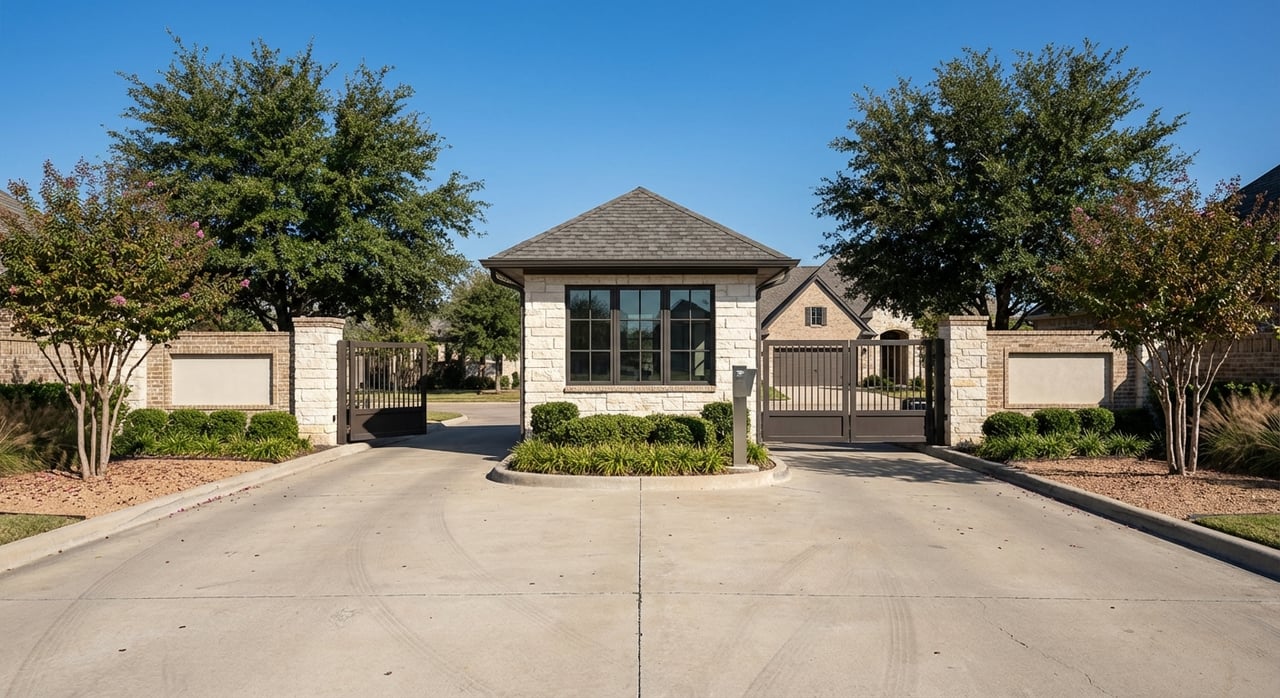
Private streets, gates, and sometimes 24/7 security create added maintenance needs and reserve obligations. City rules require recorded responsibilities and ensure emergency access. If you’re considering a gated area, confirm street status on the plat and in the CC&Rs, and understand the HOA’s obligations. See the city’s private-street and HOA responsibilities for context.
These may charge a smaller annual assessment with lighter day-to-day restrictions, while still maintaining entries and common landscaping. You get fewer amenities but lower recurring costs.
You may find a bit more flexibility and lower recurring fees. You also take on more responsibility for your home’s exterior and any shared infrastructure.
Texas law gives you important disclosure rights. After a proper written request, the association must deliver a resale certificate and governing documents, which include the restrictions, bylaws, and rules. The resale certificate must be prepared no earlier than 60 days before delivery and provided within 10 business days of a valid request. Associations may charge up to 375 dollars to prepare it and up to 75 dollars for an update. See the statute on resale certificates and timelines.
Associations must record a management certificate with contact information and keep dedicatory instruments accessible, often on a website. That helps you verify who manages the community and view the latest rules. Read more in the state’s Property Owners Protection Act.
Owners have rights to access association books and records with limited exceptions. Texas also requires notice and a right to a hearing before certain fines or suspensions are finalized. These protections matter if you inherit a violation or a pending dispute. See owner rights and procedures in Chapter 209 of the Texas Property Code.
In newer subdivisions, a developer may control the board for a limited time. The law sets triggers that shift director seats to homeowners as lots sell. If you’re buying in a new phase, ask when turnover is expected and how it will be handled. You can review turnover context under Chapter 209.
Texas law permits HOAs to enforce assessment liens in some circumstances, but it prohibits foreclosure if the lien consists only of fines or certain related fees. The code also prescribes notice and redemption rights after a sale. If a resale certificate shows a lien or past foreclosure action, treat that as a red flag. See foreclosure rules and protections in Chapter 209.
HOA dues fund the services that keep a community running. These often include common-area maintenance, pools and amenity staffing, landscaping, private-street upkeep, gate or security services, insurance for common areas, management company fees, and reserves. Billing can be annual, quarterly, or monthly.
In Frisco, fee levels vary with amenities. Market snapshots suggest small or low-amenity neighborhoods can be under roughly 50 to 100 dollars per month, while master-planned, amenity-rich communities often range from about 150 to 350 dollars or more per month. Townhomes and condos can run higher when exterior and structure expenses are included. Always verify the current amount and billing schedule in the resale certificate. For local context on typical ranges, review this Frisco HOA fee overview.
Healthy reserves protect you from surprise costs. A reserve study estimates the timing and cost of major replacements, like pool equipment, roofs on shared buildings, or private-road resurfacing. While Texas does not require every HOA to perform a reserve study or fully fund reserves, industry best practice is to do both. The Community Associations Institute explains why in its guidance on reserve studies and funding.
If an HOA maintains major assets but has little or no reserves, the risk of a special assessment rises. Ask for the current reserve balance, the date of the last reserve study, and any planned capital projects. If a special assessment is pending, confirm the amount, schedule, and what it covers.
Street ownership matters for your budget and your experience. If streets are private, the HOA is usually responsible for maintenance and must keep access for emergency services. Converting private streets to public requires city procedures and, often, owner approvals. Before you buy, confirm street status on the recorded plat and in the CC&Rs, and read the HOA’s obligations. You can find the city’s rules for private streets and conversions in Frisco’s Subdivision Requirements.
Project-level issues can affect your financing. High delinquency rates, large special assessments, major unresolved repairs, or material litigation may limit options for FHA, VA, or conventional loans. Ask your lender early whether the community meets program guidelines. Fannie Mae outlines its review process and red flags in its selling guide for project eligibility.
Use this list to stay organized from offer through option period. Order items as soon as your contract is executed, and review them carefully.
A well-run Frisco HOA can add real value, protect curb appeal, and deliver lifestyle amenities you will use and enjoy. The key is understanding the tradeoffs, verifying the numbers, and reviewing the documents early in your option period. When you pair your goals with the right community structure and a stable financial picture, you position yourself for a confident closing and a smooth first year of ownership.
If you want a discreet, expert partner to guide your HOA due diligence, coordinate with title and lenders, and match you with the right neighborhood fit, connect with Teona Harris. Request a private market consultation and move forward with clarity.







Teona Harris is dedicated to helping you find your dream home and assisting with any selling needs you may have. Contact Teona today to start your home searching journey!